

II
Variety
Garnacha
Historical Variety of DOCa Rioja:
Floral and aromatic
The earliest trace of Garnacha’s lineage appears in 1513, in Gabriel Alonso de Herrera’s seminal Obra de Agricultura. There he speaks of a grape he calls aragonés—the ancient name that unmistakably points to Garnacha’s birthplace in Aragón. From the 12th to the 16th centuries, the Crown of Aragon carried this noble family of varieties across the known world. It journeyed to France (where it became Grenache), then fanned out across the Mediterranean arc: Italy, Corsica, Sardinia, Greece… a true globetrotting aristocrat of the vine.
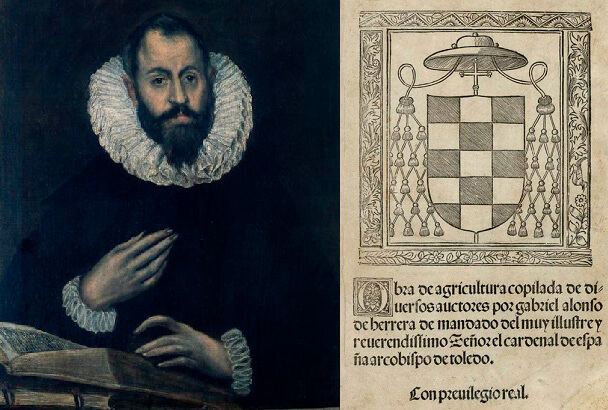
Gabriel Alonso de Herrera and his Obra de Agricultura, de 1513
Historical
notes
In 1882, José Valier, in his Memoria sobre el cultivo y plantación de la vid, paints a vivid portrait of pre-phylloxera Grenache as it thrived in southern France under names like Grenache, bois jaune, and bouge de Alicante. He describes the vine with affection: “A handsome, robust stock, blessed with abundant leaves of the palest green on both sides. Its clusters hang gracefully and well-spaced, suspended from the third bud on the cane, so that scarcely any brush the soil.”
Arrival of Garnacha in La Rioja
The legendary Rioja enologist and agronomist Víctor Cruz Manso de Zúñiga declared in 1905 that Garnacha arrived in La Rioja from Aragón, brought in the wake of the devastating oidium outbreak that ravaged Rioja’s vineyards in 1854—a heroic replanting chapter in our region’s story.
By 1914, Nicolás García de los Salmones records Garnacha plantings across various zones, and within Rioja he singles out Quel as one of the variety’s most important strongholds in our appellation.
Agricultura General, de José Antonio Valcárcel (1791) y Tratado de Agricultura General de Alonso de Herrera (1513).
Garnachas of Quel: pioneers of Rioja
Raquel and Rubén Pérez Cuevas, in the El Arca vineyard.
The Agricultural Service of the Navarra Provincial Council, established in 1896 and led by the pioneering agronomist Nicolás García de los Salmones, carried out remarkable foundational work in the replanting of vineyards ravaged by phylloxera at the close of the 19th century. In 1912, they hosted the first National Viticulture Congress, and in one of the event’s most influential presentations, García de los Salmones unveiled a comprehensive list: 42 grape varieties under cultivation in the province of Logroño and 26 in Álava.
As highlighted by researchers Fernando Martínez de Toda and Juan Carlos Sancha in their studies, this inventory stands as “the most extensive ever recorded in the literature on the early varietal heritage of Rioja.” What makes it truly extraordinary is that García de los Salmones didn’t stop at a mere catalogue—he mapped the varieties to specific villages, and singled out Quel as the foremost stronghold of Garnacha in the entire region. (He also noted Quel’s notable presence of Mazuela, Anavés, and Chasselas.)
This document holds immense historical weight: it marks the very first time anyone systematically quantified Rioja’s varietal patrimony by linking grape castes directly to their places of origin. That connection elevates the Garnachas of Quel to true pioneer status—the earliest documented epicenter of the variety in Rioja.
Garnacha: subtle, elegant, and floral variety * Garnacha: subtle, elegant, and floral variety *
Some notes on Garnacha
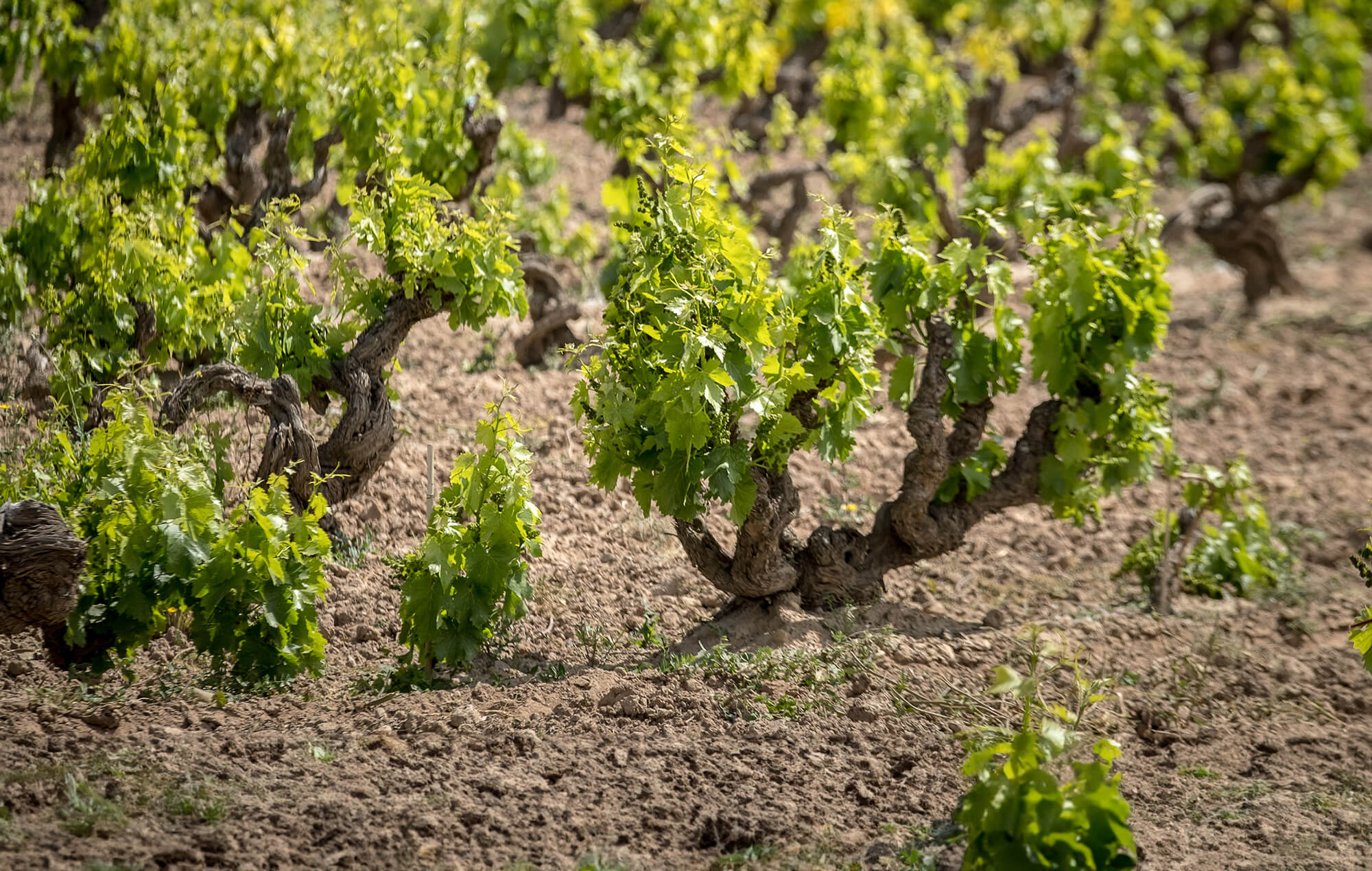
Bush-trained Garnacha vines from Ontañón in Quel.
Garnacha is a late —ripening variety— vigorous, highly productive, and remarkably wind-resistant. It thrives in poor, dry soils and feels right at home in harsh, low-fertility terroirs. In the vineyard, it’s classically trained as gobelet (bush vines) or cordon, with short pruning the norm to rein in its natural exuberance and keep yields in check.
The clusters are large, conical, and tightly packed. Berries are medium-sized, with thick skins and generous juice. Though a late-ripening grape, it flowers early; that robust vigor helps it shrug off fierce winds and drought with ease.
Garnacha shows good resistance to oidium (a common Mediterranean foe), but it’s prone to coulure (shatter) and bacterial issues. Those compact, tight bunches create ideal conditions for mildew and botrytis in humid years—explaining why it excels in drier Mediterranean climates. Yields swing wildly depending on soil fertility and vine management.
Flavors, Aromas, Emotions…
The aromatic beauty of Garnacha
Wines from this variety burst with red fruits—raspberry and strawberry at the forefront—woven with subtle white pepper, boozy cherry liqueur hints, and sometimes a playful touch of gummy-bear sweetness.
Garnacha reds deliver an essential sense of gentle sweetness on the palate: plush, silky, and inviting. You’ll find notes of citrus peel, blood orange, cinnamon, wild berries from the underbrush, and endless floral references—dried rose, violet, and Mediterranean scrub herbs dancing through.
A sexy grape
As Amaya Cervera writes in her piece “Garnacha: Can a Grape Be Sexy?”, its drought tolerance and oidium resistance fueled its rapid spread from Aragón across the 19th century. For decades, though, critics hammered it for pale color and pronounced oxidative tendencies, making high-quality dry reds tricky and steering it toward the classic rancio and sweet styles of Catalonia.
Yet those same traits are now advantages: its long growing cycle is tailor-made for a warming climate, while its naturally low pH delivers beautiful balance between alcohol and freshness—pure gold in today’s world.
Cervera also points out that Garnacha is one of the most efficient sugar synthesizers among red varieties. Don’t be surprised by high alcohol levels on the label; it’s simply part of the grape’s DNA—whether hitting 14% in warm Mediterranean zones or in cooler mountain sites.
Otras variedades
Tempranillo
Graciano
Viura
Tempranillo blanco